
 Image 1 of 1
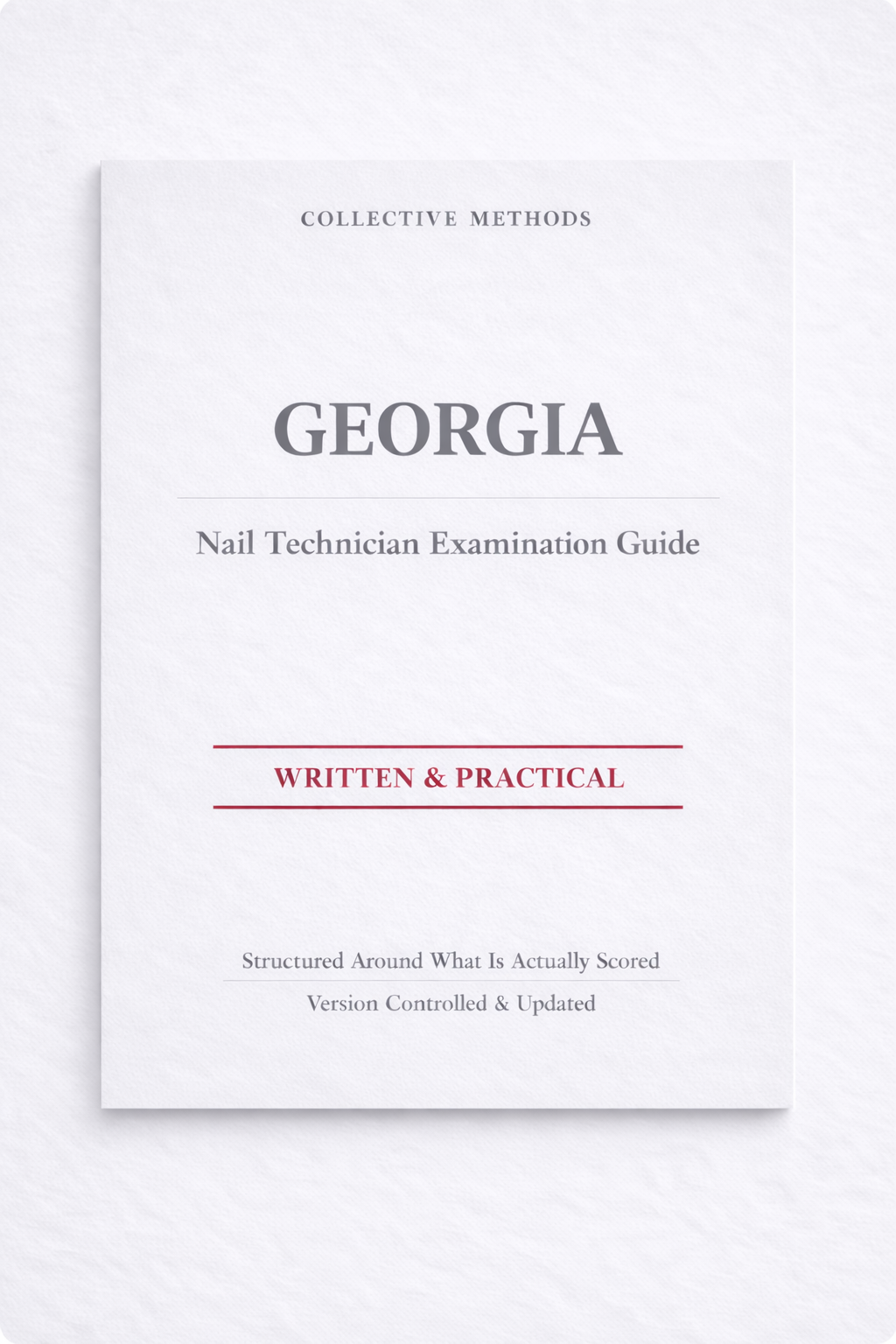
This is not a textbook or study material. This is a structured exam guide showing what is actually scored, what carries the most weight, and where candidates most often lose points.
Designed for candidates preparing for Georgia nail technician licensing examinations.
Built around published examination weighting, current operational exam requirements, and performance-risk areas, this guide helps candidates focus on the parts of the exam that matter most instead of overstudying low-return material.
What This Guide Is (and Isn’t)
This guide is not a textbook-style study manual and does not replace nail technology training, school instruction, or hands-on practice.
It is a structured exam guide designed to help candidates understand:
what is actually scored
which categories carry the most weight
where candidates most often lose points
how to prioritize study time based on scoring impact
how to prepare more strategically for Georgia’s written and practical examination process
What This Guide Covers
Inside this guide:
Georgia nail technician examination structure overview
written examination specifications
practical examination specifications
scoring model and passing standard
scored category weighting and prioritization
high-frequency competency focus areas
common point-loss patterns
performance risk control priorities
structured readiness timelines
retake protocol
official verification sources
regulatory change watch
Delivery
Digital file. Download provided after purchase.
Important
Licensed for individual use only. May not be copied, shared, forwarded, or redistributed.
Why this version is stronger:
It gets to the value faster, sounds a little more premium, and reinforces your core differentiator: students do not need more random study material, they need clearer direction on what actually affects the score.
One more upgrade I’d recommend for the website specifically: add a very short line near the top like:
Built for candidates who want to study with structure, not guesswork.
This is not a textbook or study material. This is a structured exam guide showing what is actually scored, what carries the most weight, and where candidates most often lose points.
Designed for candidates preparing for Georgia nail technician licensing examinations.
Built around published examination weighting, current operational exam requirements, and performance-risk areas, this guide helps candidates focus on the parts of the exam that matter most instead of overstudying low-return material.
What This Guide Is (and Isn’t)
This guide is not a textbook-style study manual and does not replace nail technology training, school instruction, or hands-on practice.
It is a structured exam guide designed to help candidates understand:
what is actually scored
which categories carry the most weight
where candidates most often lose points
how to prioritize study time based on scoring impact
how to prepare more strategically for Georgia’s written and practical examination process
What This Guide Covers
Inside this guide:
Georgia nail technician examination structure overview
written examination specifications
practical examination specifications
scoring model and passing standard
scored category weighting and prioritization
high-frequency competency focus areas
common point-loss patterns
performance risk control priorities
structured readiness timelines
retake protocol
official verification sources
regulatory change watch
Delivery
Digital file. Download provided after purchase.
Important
Licensed for individual use only. May not be copied, shared, forwarded, or redistributed.
Why this version is stronger:
It gets to the value faster, sounds a little more premium, and reinforces your core differentiator: students do not need more random study material, they need clearer direction on what actually affects the score.
One more upgrade I’d recommend for the website specifically: add a very short line near the top like:
Built for candidates who want to study with structure, not guesswork.